























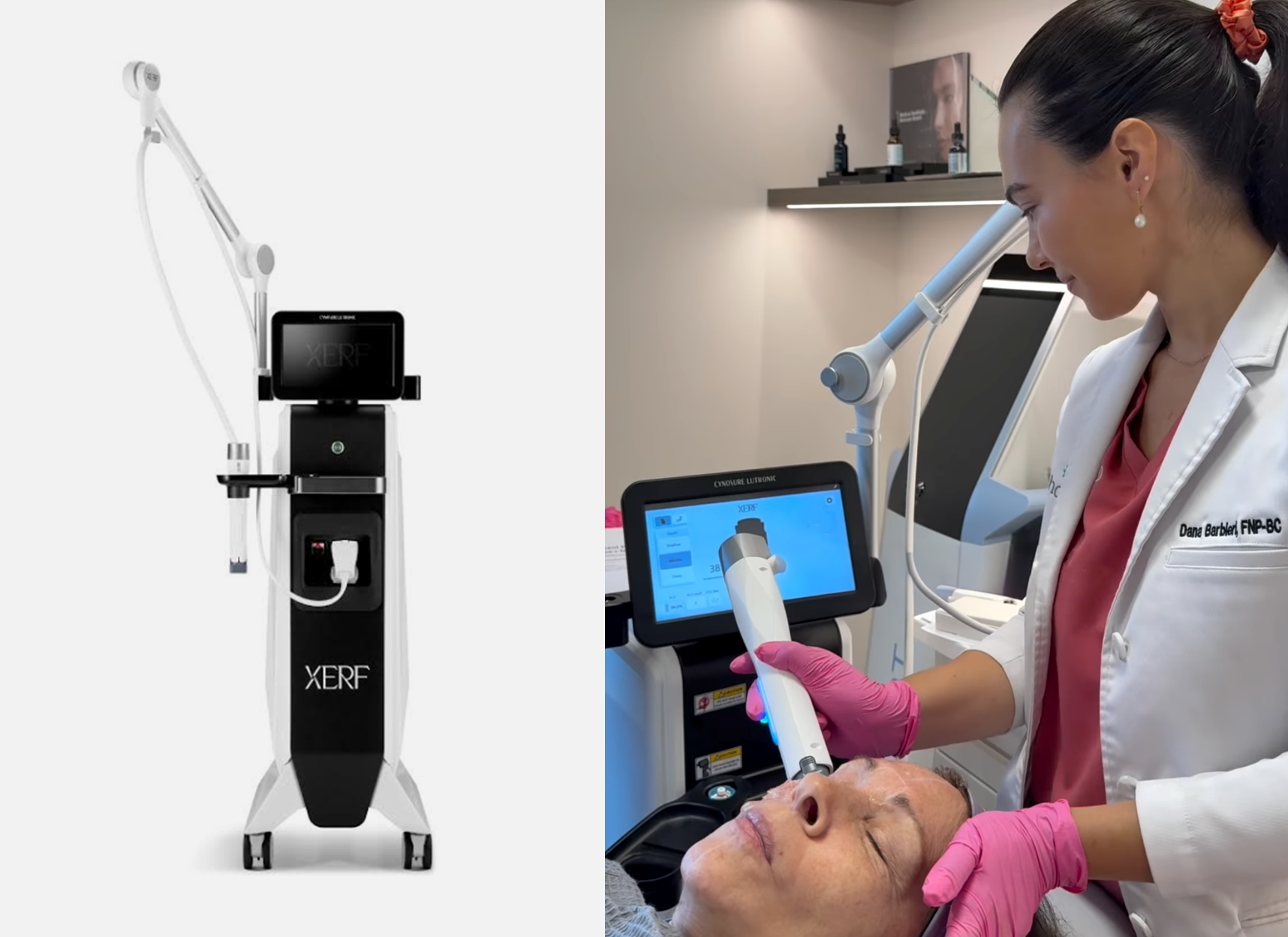
If you’ve started noticing jowls, a less-defined jawline, or looser skin along your face and neck, but you’re not looking for surgery or significant downtime, XERF may be worth considering. XERF is a non-surgical radiofrequency treatment designed to address skin laxity and support collagen remodeling for a firmer, more defined appearance. But like any aesthetic treatment, XERF isn’t necessarily the right choice for everyone.
So, who is a good candidate for XERF? Here’s what we look for.
Who Is an Ideal Candidate for XERF?
XERF may be a good option for patients experiencing mild to moderate skin laxity who want to improve facial definition without surgery.
We especially consider XERF for patients who are beginning to notice:
- Jowling along the lower face
- A jawline that looks less defined than it used to
- Loose or lax skin on the face and neck
- Early signs of facial aging
- Changes in facial definition after weight loss
- Skin that feels less firm or supported
XERF uses radiofrequency energy to heat targeted tissue and stimulate the body’s natural collagen-remodeling process. Rather than changing your facial features, the goal is to help lift, contour, and restore definition in a way that still looks like you.
Is XERF Good for Jowls and the Jawline?
The lower face is one of the areas where patients often begin noticing skin laxity first. You might see the beginnings of jowls, notice that your jawline isn’t as crisp in photos, or feel like the transition between your face and neck has become less defined. XERF can be used to address laxity through the lower face, jawline, and neck, making it an option for patients looking for non-surgical facial contouring and skin tightening. However, not every jowl is caused by the same thing. Skin laxity, facial volume, anatomy, and even the way different areas of the face age can all contribute. That’s why an in-person assessment is important before deciding that XERF, or any single treatment, is the answer.
What Age Is Best for XERF?
There isn’t one “perfect” age to start XERF. Some patients may consider treatment when they first begin noticing subtle laxity or loss of definition, while others may use XERF to address more established changes in the face and neck. At NicholsMD, we focus less on the number on your driver’s license and more on your skin, anatomy, goals, and degree of laxity. You don’t necessarily have to wait until sagging becomes significant to start thinking about collagen-banking treatments.
Is XERF a Good Option If I’m Not Ready for a Facelift?
For the right patient, XERF can be an appealing option when you want to improve laxity and facial definition but aren’t ready for, or interested in, surgical intervention. XERF is designed for patients seeking a natural-looking, non-surgical improvement with a treatment experience that can fit more easily into everyday life.
Does XERF Hurt?
Comfort is one of the reasons we’re excited about XERF. The treatment is designed to deliver radiofrequency energy while incorporating cooling technology for a more comfortable experience. No numbing is necessary (although we do offer Journavx and Pronox as added comfort options), and there is little to no downtime afterward. For busy patients who want skin tightening without adding significant recovery time to their calendars, that can be a major advantage.
How Many XERF Treatments Will I Need?
At NicholsMD, we typically begin with a series of two XERF treatments, although your exact treatment plan will depend on your skin and goals. Unlike a treatment designed to create an overnight transformation, XERF works by supporting your body’s natural collagen-remodeling process. While you may notice an instant contour, results continue develop progressively as that process takes place. This is one of the reasons XERF can work particularly well for patients who want their results to look subtle, refreshed, and natural rather than dramatically different.
XERF vs. Ultherapy: How Do I Know Which One I Need?
XERF and Ultherapy are both non-surgical treatments that can be used as part of a skin-tightening plan, but they use different types of energy and aren’t interchangeable for every patient.
XERF uses radiofrequency energy, while Ultherapy uses microfocused ultrasound energy. Which treatment makes the most sense depends on factors including your anatomy, degree of laxity, treatment goals, and the areas you want to address.
For some patients, the answer may even be a combination approach rather than choosing one treatment in isolation.
Who Might Not Be a Good Candidate for XERF?
Certain medical conditions, implanted devices, medications, pregnancy, or other individual factors may also affect whether radiofrequency treatment is appropriate for you. This is exactly why we don’t believe in choosing aesthetic treatments based solely on what’s trending. The right treatment should be based on your anatomy and your goals.
Is XERF Right for Me?
If you’re looking in the mirror and thinking, I still look like myself, but my jawline isn’t quite as defined as it used to be, that’s exactly the kind of conversation worth having with your provider.
At NicholsMD, our board-certified providers create personalized treatment plans based on your facial anatomy, skin quality, lifestyle, and long-term goals. XERF may be recommended on its own or as part of a larger plan to help you maintain natural-looking facial definition as you age. The goal isn’t to change the way you look., it’s to help you look and feel like the best version of yourself.
Interested in XERF for your face, jawline, or neck? Schedule a consultation at NicholsMD to find out if XERF is the right skin-tightening treatment for you. (LINK TO BOOKING PAGE)