You finally had liposuction, only to notice dents, divots, uneven contours, or areas that look overcorrected once the swelling subsided.
If this sounds familiar, you’re not alone.
Contour irregularities after liposuction are one of the most common concerns patients experience following body contouring procedures. The good news? In many cases, liposuction dents can be improved without undergoing another surgery. Thanks to advances in regenerative aesthetics, innovative treatments like AlloClae are helping patients restore smoother, more natural-looking contours without the need for additional liposuction or traditional fat transfer.
Liposuction dents, also known as contour irregularities, can appear as:
These irregularities most commonly occur on the:
While many patients assume these issues are caused by remaining fat, the reality is often the opposite. In many cases, the problem is not excess fat. It’s a lack of volume.
There are several reasons contour irregularities can develop after liposuction.
One of the most common causes of liposuction dents is the removal of too much fat in a localized area. While liposuction is designed to sculpt and contour the body, excessive fat removal can leave depressions, divots, or uneven transitions between treated and untreated areas.
Internal scar tissue can sometimes create tethering beneath the skin, leading to dimpling or irregular contours.
Every patient heals differently. As swelling resolves and tissues settle, contour irregularities may become more noticeable over time.
Patients with thinner skin or reduced skin elasticity may be more likely to notice contour changes after fat removal.
Significant weight changes following liposuction can sometimes accentuate existing contour irregularities.
In the early stages of recovery, some unevenness may improve as swelling resolves. However, if dents, depressions, or contour deficiencies remain visible several months after surgery, they typically do not disappear on their own. This is especially true when volume loss is the underlying issue. Historically, patients were often told they needed another surgery, fat transfer, or simply had to accept the result. Today, there is another option.
Many patients assume that if liposuction created the problem, more liposuction can fix it.
Unfortunately, that’s not always the case.
When an area already lacks volume, removing additional fat can actually worsen the appearance of dents and depressions. Revision liposuction may be appropriate in select cases, but for many patients, the real issue is not excess fat. It’s missing volume and structural support. This is where volume restoration treatments like AlloClae are changing the conversation.
AlloClae is an innovative structural adipose allograft designed to restore volume and improve contour deficiencies throughout the body. Unlike traditional fat transfer, AlloClae does not require liposuction to harvest fat from another area of your body. Instead, AlloClae provides immediate structural volume and support, helping improve contour irregularities and restore smoother transitions in areas affected by volume loss. For patients with dents, divots, depressions, or asymmetry after liposuction, AlloClae offers a less invasive alternative to surgical revision procedures.
Many post-liposuction irregularities occur because too much volume was removed. Rather than removing additional fat, AlloClae focuses on replacing what’s missing.
By restoring volume where it has been lost, AlloClae can help:
The goal isn’t to create volume where it doesn’t belong. The goal is to restore balance and improve areas that appear hollow, uneven, or overcorrected.
For years, fat transfer was one of the primary options for correcting contour deformities after liposuction. While fat transfer can be effective, it comes with several considerations.
For many patients seeking correction of liposuction dents, these advantages make AlloClae an appealing alternative.
At NicholsMD, AlloClae is frequently used to address volume deficiencies and contour concerns throughout the body.
One of the most exciting applications of AlloClae is the correction of post-liposuction contour irregularities and depressions.
AlloClae can help soften the appearance of hip dips and create smoother transitions between the waist and hips.
Patients seeking subtle enhancement or restoration of lost volume may benefit from AlloClae treatment.
Uneven contours resulting from prior procedures or natural anatomy may be improved through strategic volume restoration.
You may be a candidate if you have:
The best way to determine candidacy is through a comprehensive consultation and evaluation.
Not every contour irregularity is caused by volume loss.
Some concerns may be related to:
At NicholsMD, we take a personalized approach to body contouring concerns, identifying the true cause of the issue before recommending treatment. This allows us to determine whether AlloClae, another treatment, or a combination approach is most appropriate.
For years, patients with contour irregularities after liposuction had limited options beyond additional surgery or fat transfer. Today, regenerative aesthetic treatments are changing what’s possible. AlloClae offers a new approach to correcting volume deficiencies by restoring structural support and smoother contours without the need for fat harvesting or extensive surgical intervention.
If you’ve been told that dents or contour irregularities after liposuction are simply something you’ll have to live with, it may be time to explore a different solution. At NicholsMD, Dr. Kim Nichols and her team are proud to offer AlloClae, an innovative volume restoration treatment designed to improve contour deficiencies without the need for additional surgery or fat harvesting. Through a personalized consultation, we’ll evaluate your concerns, discuss your goals, and determine whether AlloClae may help restore smoother, more natural-looking contours.
Schedule your consultation today to learn how AlloClae is helping redefine what’s possible after liposuction.
Have you noticed tiny red, pink, or purple lines appearing on your cheeks, around your nose, or across your face?
Often referred to as “broken capillaries,” these visible blood vessels are one of the most common concerns we see in dermatology. While they may seem to appear overnight, broken capillaries typically develop gradually over time due to a combination of genetics, lifestyle factors, environmental exposure, and underlying skin conditions.
The good news? They’re common, they’re usually harmless, and there are highly effective treatment options available. Here’s what you should know about what causes broken capillaries on the face and how to help prevent them.
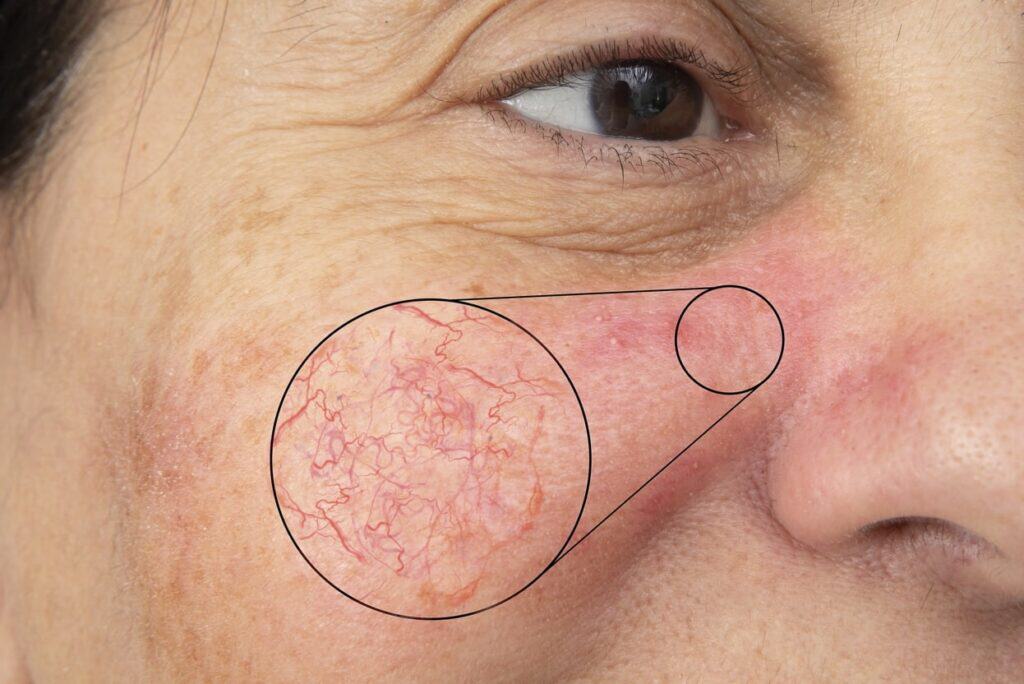
Broken capillaries, also known as facial spider veins or telangiectasias, occur when tiny blood vessels beneath the skin become enlarged and visible.
They often appear as:
Although they’re commonly called “broken” capillaries, these vessels haven’t actually burst. Instead, they’ve become dilated and remain visible through the skin.
One of the leading causes of broken capillaries is cumulative sun exposure. UV radiation weakens collagen and elastin, the structural proteins that help support blood vessels and skin. Over time, this damage can cause blood vessels to become more visible and contribute to chronic facial redness.
This is especially common on:
Daily sunscreen use remains one of the best ways to protect your skin from developing visible blood vessels and signs of premature aging.
Sometimes, the cause is simply in your DNA. If your parents or close relatives have visible facial veins, rosacea, or persistent facial redness, you may be more likely to develop broken capillaries yourself. Patients with fair skin often notice these vessels more prominently because there is less pigment to conceal them beneath the skin.
Many people mistake rosacea for sensitive skin or occasional flushing.
Rosacea is a chronic inflammatory skin condition that frequently causes:
Over time, repeated inflammation and flushing can cause capillaries to enlarge and become permanently visible. In fact, rosacea is one of the most common underlying causes of broken capillaries on the face.
Anything that repeatedly causes the face to flush can contribute to visible blood vessels over time.
Common triggers include:
Repeated dilation of facial blood vessels may eventually cause them to remain enlarged and visible even when the flushing subsides.
As we age, our skin naturally produces less collagen and elastin. The skin becomes thinner, and the supportive structures surrounding blood vessels weaken. As a result, capillaries become more visible through the skin’s surface. This is one reason broken capillaries often become more noticeable in our 40s, 50s, and beyond.
Wind, cold temperatures, heat, and sudden weather changes can all place stress on the skin and blood vessels. People who spend significant time outdoors may experience more facial redness and visible capillaries due to repeated environmental exposure. This is particularly common in regions that experience seasonal weather extremes.
Repeated irritation can also contribute to broken capillaries.
Potential triggers include:
While skincare products don’t directly “cause” broken capillaries, chronic irritation can increase inflammation and redness, making existing vessels more noticeable.
Unfortunately, once a capillary becomes permanently dilated and visible, it typically does not disappear on its own. While skincare products may help reduce redness and inflammation, they generally cannot eliminate visible blood vessels that have already formed. This is why many patients seek professional treatment.
The most effective treatments target the blood vessels directly.
Depending on your skin type and concerns, treatment options may include:
At NicholsMD, we evaluate the underlying cause of facial redness and visible blood vessels before recommending treatment. Because broken capillaries can sometimes be associated with rosacea or other skin conditions, a personalized approach is key.
While not all broken capillaries can be prevented, these habits may help reduce your risk:
If you’re experiencing:
A board-certified dermatologist can help determine the cause and recommend the most effective treatment options.
Broken capillaries are incredibly common, but they don’t have to be something you simply live with.
Whether they’re caused by sun damage, genetics, rosacea, aging, or repeated flushing, understanding the underlying trigger is the first step toward healthier-looking skin.
At NicholsMD, our board-certified dermatology team takes a personalized approach to facial redness and vascular concerns, helping patients achieve clearer, more even-toned skin with treatment plans tailored to their unique needs.
If you’re concerned about broken capillaries, facial redness, or rosacea, schedule a consultation to learn which treatment options may be right for you.
One of the most common questions we hear at NicholsMD is:
“When should I start Botox?”
The answer may surprise you. There is no magic age when everyone should begin treatment. Instead, the right time depends on your facial anatomy, muscle movement, genetics, skin quality, and aesthetic goals. Whether you’re considering preventative Botox in your 20s or corrective Botox later in life, understanding how neuromodulators work can help you make an informed decision.
Botox is a neuromodulator that temporarily relaxes specific facial muscles responsible for creating expression lines.
Common treatment areas include:
When administered by an experienced injector, Botox can soften wrinkles while maintaining natural facial movement and expression. At NicholsMD, our philosophy is simple: #NaturalAtNichols results that help you look refreshed, never frozen.
Preventative Botox refers to treatment before wrinkles become permanently etched into the skin.
Every time you smile, squint, frown, or raise your eyebrows, your facial muscles create folds in the skin. Over time, those temporary lines can become visible even when your face is at rest.
Preventative Botox works by reducing repetitive muscle movement before deeper lines develop.
The goal is not to change your appearance. The goal is to preserve smoother skin over time.
The better question is not “How old are you?” but rather “What is your skin showing?”
Some patients begin preventative Botox in their late 20s or early 30s, while others may not need treatment until later.
You may be a good candidate if:
Rather than focusing on age alone, we evaluate the unique characteristics of your face and skin.
Absolutely not. Many patients begin Botox in their 40s, 50s, 60s, and beyond with excellent results.
Corrective Botox can:
While deeper static wrinkles may not disappear completely with Botox alone, treatment can significantly improve their appearance.
Goal:
Prevent lines from becoming deeply etched.
Best For:
Patients noticing early movement-related wrinkles.
Goal:
Improve the appearance of existing wrinkles and prevent progression.
Best For:
Patients with established expression lines.
Both approaches can be effective. The right strategy depends on your skin, goals, and anatomy.
At NicholsMD, every Botox treatment begins with a comprehensive consultation.
We evaluate:
This personalized approach allows us to determine whether Botox is appropriate and how much product is needed to achieve natural-looking results.
Many people associate Botox solely with anti-aging, but neuromodulators can also be used for:
When performed thoughtfully, Botox can subtly enhance overall facial harmony.
Most patients enjoy results for approximately three to four months. Consistent treatment can help maintain smoother skin and may reduce the formation of deeper wrinkles over time. Many NicholsMD patients choose to maintain their results through regular appointments and customized treatment plans.
The best time to start Botox is not determined by a birthday. It’s when your skin, muscle movement, and goals indicate that treatment could be beneficial. Whether you’re curious about preventative Botox, looking to soften existing wrinkles, or simply exploring your options, a consultation with a board-certified dermatology team can help you understand what is right for you. At NicholsMD, we believe great results should never look obvious. Through personalized treatment planning and a commitment to natural-looking outcomes, we help patients age confidently and beautifully on their own terms.
Interested in learning whether Botox is right for you? Schedule a consultation with NicholsMD and discover what a customized approach to aging well can look like.
If you’re noticing persistent acne in your 20s, 30s, 40s, or beyond, you’re far from alone. Adult acne is one of the most common concerns we treat at NicholsMD. In fact, many adults are surprised to learn that acne can continue well into adulthood or even appear for the first time later in life. The good news? Understanding what’s causing your breakouts is the first step toward clearer, healthier skin.
Adult acne is often more complex than teenage acne. While excess oil production and clogged pores still play a role, adult breakouts are frequently influenced by hormones, stress, lifestyle factors, and even the products you’re using.
Common causes of adult acne include:
Because acne has multiple contributing factors, a personalized treatment plan is often the most effective approach.
Hormonal acne is especially common in women and often appears along the lower face, jawline, chin, and neck.
You may be experiencing hormonal acne if your breakouts:
Hormones such as androgens can increase oil production, leading to clogged pores and inflammation. This is why hormonal acne often requires a different treatment strategy than traditional acne. At NicholsMD, we frequently evaluate whether hormonal influences may be contributing to breakouts before recommending treatment.
Many patients are surprised to learn that their skincare routine may actually be contributing to their breakouts.
Over-Exfoliating – More is not always better. Using multiple acids, scrubs, retinoids, and acne products at once can damage your skin barrier, causing irritation and inflammation that may worsen acne.
Chasing Every Trend – TikTok trends and viral skincare products can be tempting, but not every product is right for every skin type. What works for one person may trigger breakouts for another.
Using Comedogenic Products – Some moisturizers, makeup products, and hair products contain ingredients that can clog pores and contribute to acne. A board-certified dermatologist can help identify whether your products are helping or hurting your skin.
Skipping Moisturizer – Many acne sufferers believe moisturizing will make breakouts worse. In reality, dehydrated skin can become irritated and produce even more oil, potentially leading to additional breakouts.
Is It Really Acne? – Not every breakout is actually acne. Conditions such as rosacea, perioral dermatitis, folliculitis, and irritation from skincare products can closely resemble acne. This is one reason why a professional evaluation is so important. Treating the wrong condition can delay improvement and worsen symptoms.
While over-the-counter products can help some individuals, persistent or severe acne often benefits from professional treatment.
Depending on your skin, your treatment plan may include:
At NicholsMD, we utilize advanced skin analysis and personalized treatment plans to identify the root cause of your breakouts and create a strategy tailored specifically to your skin.
If your acne is:
It may be time to schedule a consultation. The earlier acne is treated effectively, the lower the risk of long-term scarring and pigmentation changes.
Adult acne can be frustrating, but it is also highly treatable. Whether your breakouts are hormonal, stress-related, or caused by an underlying skincare mistake, identifying the true cause is key to achieving clearer skin.
At NicholsMD, our board-certified dermatology team takes a personalized approach to acne treatment, helping patients throughout Greenwich, Fairfield County, and beyond achieve healthier, more confident skin. If you’re still asking, “Why am I breaking out?” we’re here to help you find answers.
“Glass skin” has officially become one of the most searched skincare trends in the world and for good reason. Patients today are no longer chasing heavy makeup or dramatic transformation. Instead, they want healthy, hydrated, radiant skin that looks naturally smooth, refined, and luminous.
But what actually creates glass skin?
At NicholsMD of Greenwich, we believe glass skin is less about filters and more about skin quality. True glow comes from combining medical-grade skincare, collagen stimulation, hydration, and personalized in-office treatments that improve the skin itself.
Glass skin refers to skin that appears:
Despite social media making it look effortless, glass skin is rarely achieved through one product alone. It’s typically the result of:
One of the most exciting treatments for glass skin right now is SkinVive by Juvéderm.
Unlike traditional filler, SkinVive is designed to improve skin hydration, smoothness, and luminosity rather than add volume. Tiny microdroplets of hyaluronic acid are placed beneath the skin to help create a healthy, dewy glow from within.
Patients love SkinVive because it helps skin look:
It’s become one of the most requested “quiet luxury” injectable treatments for patients wanting healthy-looking skin without looking “done.”
Many people do not realize that Botox and other neuromodulators can also contribute to glass skin. When strategically placed by an experienced injector, neuromodulators help soften repetitive facial movement that contributes to:
By creating smoother skin movement and refined texture, treatments like Botox can help skin reflect light more evenly, contributing to that polished, glass-like finish. At NicholsMD, our philosophy is always natural-looking results that help patients look refreshed, rested, and like the best version of themselves.
One of our favorite treatments for improving skin quality and achieving glass skin is The Greenwich Secret™, our customized RF microneedling treatment. RF microneedling combines radiofrequency energy with collagen stimulation to improve:
The result is smoother, tighter, healthier-looking skin with significantly improved radiance over time. Because treatment plans can be customized with targeted serums and regenerative add-ons, it has become a cornerstone treatment for patients focused on long-term skin quality and precision anti-aging.
Need radiant, dewy skin before a vacation, wedding, photoshoot, or event? The Weekender™ has become one of our go-to treatments for immediate glow.
This treatment combines:
Together, they help create smoother, brighter, more luminous skin with minimal downtime. Laser Genesis helps reduce redness and stimulate collagen, while Aquagold delivers customized ingredients directly into the skin through microchanneling for that filtered, pore-refined glow patients love. It’s one of the ultimate “you look amazing but I can’t figure out why” treatments.
While in-office treatments can dramatically accelerate results, daily skincare matters just as much.
One of the biggest skincare trends right now is peptide-powered wrinkle support and for good reason.
The combination of SkinCeuticals P-TIOX Serum and SkinCeuticals P-TIOX Wrinkle-Modulating Peptide Cream helps support:
Patients love that the serum and cream layer beautifully together while helping skin appear soft, polished, and luminous without feeling heavy.
To achieve healthy, glowing skin, we often recommend:
The healthiest, most beautiful skin is not poreless, filtered, or overly treated. Real glass skin is:
At NicholsMD, we believe the best results are the ones that still look like you, just brighter, smoother, fresher, and more radiant.
From acne breakouts and rosacea flare-ups to eczema, inflammation, and dull skin, more patients are asking the same question lately: Can my gut health actually affect my skin?
The short answer? Yes.
As dermatologists continue to study the connection between internal health and skin health, one thing is becoming increasingly clear: your skin and your gut are deeply connected. This relationship is often referred to as the gut-skin axis, and it’s changing the way we think about healthy, glowing skin. At NicholsMD of Greenwich, we believe beautiful skin starts with a comprehensive, evidence-based approach that looks beyond surface-level skincare alone.
The gut-skin axis refers to the ongoing communication between your digestive system, immune system, hormones, and skin.
Your gut microbiome, which consists of trillions of bacteria and microorganisms living in the digestive tract, plays a major role in:
When the gut microbiome becomes disrupted, it can contribute to systemic inflammation throughout the body, including the skin.
This may present as:
While not every skin issue originates internally, dermatologists are increasingly seeing connections between gut imbalance and chronic inflammatory skin conditions.
Some common signs include:
Many patients are surprised to learn that chronic stress, poor sleep, highly processed diets, alcohol intake, and inflammation can all impact both gut health and skin quality simultaneously.
Absolutely. Stress is one of the biggest contributors to inflammation within the body.
When cortisol levels rise chronically, patients may experience:
This is why healthy skin is never just about products. Lifestyle factors like sleep, stress management, nutrition, and overall wellness can significantly influence skin health and aging.
At NicholsMD of Greenwich, we approach skin health through both prevention and personalization.
Some Dr. Nichols-recommended ways to support the gut-skin connection include:
Focus on:
Reducing excess sugar and ultra-processed foods may also help minimize inflammation in some patients.
Over-exfoliation and aggressive skincare routines can worsen inflammation.
A simplified, evidence-based skincare routine focused on hydration and barrier support is often more effective than using too many active ingredients at once.
Chronic stress and poor sleep can directly impact:
Healthy skin and overall wellness are deeply connected.
Persistent skin concerns should always be evaluated by a board-certified dermatologist to determine whether hormones, inflammation, lifestyle, or medical skin conditions may be contributing factors.
One of the biggest misconceptions in skincare today is that healthy skin comes from chasing perfection or constantly adding more products.
In reality, the future of dermatology is moving toward:
At NicholsMD, our philosophy has always been to help patients look like the healthiest, most confident version of themselves through natural-looking, comprehensive care – because great skin is not just about what you put on your skin. It’s also about what’s happening within.
Regenerative aesthetics is quickly becoming one of the biggest conversations in skincare and cosmetic dermatology. Patients are no longer just asking about filler or wrinkle relaxers. Instead, they want treatments that support healthier, stronger, more youthful-looking skin from within. One of the newest ingredients generating buzz online is PDRN. Often referred to as “salmon DNA skincare,” PDRN has rapidly gained popularity in K-beauty and regenerative medicine conversations for its potential skin-repairing and collagen-supporting benefits.
But many patients are now asking:
Is PDRN better than exosomes, PRP, PRF, or growth factors?
At NicholsMD of Greenwich, we believe regenerative aesthetics is an exciting and evolving category, but we also believe in prioritizing treatments backed by strong clinical experience, physician oversight, and real patient outcomes.
PDRN stands for polydeoxyribonucleotide, a regenerative ingredient often derived from salmon DNA. It is being studied for its potential ability to:
PDRN is currently trending in:
While interest in PDRN is rapidly growing, much of the excitement is still emerging, especially within topical skincare.
Exosomes are one of the most advanced regenerative technologies currently being explored in aesthetic medicine.
At NicholsMD, we offer Plated Skin Science exosomes, which are designed to support:
Exosomes act as cellular messengers, helping support communication between skin cells and encouraging healthier skin function. They are commonly paired with treatments like:
Currently, exosomes remain one of the most promising and exciting categories in regenerative skincare because of their strong potential for skin recovery and rejuvenation.
Another cornerstone of regenerative aesthetics is platelet-based therapy.
PRP uses your body’s own growth factors derived from a blood sample to support:
PRF is considered a next-generation evolution of PRP. It contains:
This slower-release structure may help support longer-lasting regenerative activity within the skin. At NicholsMD, we also offer PRF EZ Gel, an advanced regenerative option that combines natural volume enhancement with collagen support for patients seeking softer, more natural-looking rejuvenation.
The honest answer is:
Not necessarily, at least not yet.
PDRN is incredibly interesting and we expect to continue seeing growth in this category, especially as more research and technology develop. However, in our practice, we currently lean more heavily toward regenerative treatments like:
Why?
Because these treatments currently have:
That said, we absolutely see PDRN as part of the future conversation surrounding regenerative skincare and collagen-focused treatments.
One of the biggest shifts happening in aesthetic medicine right now is the move toward:
Patients increasingly want treatments that help the skin function better, not simply look tighter or fuller.
At NicholsMD of Greenwich, our approach to regenerative aesthetics focuses on evidence-based treatments that support healthy, beautiful skin while maintaining natural-looking results.
As technologies like PDRN continue evolving, we are excited to watch the science grow alongside the future of precision anti-aging and regenerative dermatology.
When it comes to skincare, trends come and go. But ask nearly any board-certified dermatologist what the single most important skincare product is, Dr. Nichols included, and the answer stays remarkably consistent:
Sunscreen. Every single day.
At NicholsMD of Greenwich, we believe beautiful skin starts with healthy skin. Whether your goal is preventing premature aging, protecting collagen, minimizing hyperpigmentation, or maintaining the results of treatments like Botox, Fraxel, Ultherapy, or RF microneedling, daily SPF is the foundation of long-term skin health.
The sun’s ultraviolet (UV) rays are one of the leading causes of:
In fact, many of the visible signs people associate with “aging” are actually signs of cumulative sun exposure over time.
Daily sunscreen helps protect your skin from both:
That’s why dermatologists consistently recommend a broad-spectrum SPF 30 or higher as part of your daily routine, even on cloudy days or while indoors.
One of the most common questions Dr. Nichols hears right now is:
“Do I really need sunscreen if I’m inside all day?”
The answer is yes, especially if you spend time near windows, drive frequently, or work in front of screens with significant visible light exposure.
UVA rays can penetrate through glass and contribute to:
For patients investing in medical-grade skincare or cosmetic treatments, daily SPF becomes even more essential to protect and maintain results.
This is another major skincare conversation right now, and the truth is that both mineral and chemical sunscreens can be highly effective when properly formulated.
Mineral Sunscreen
Mineral sunscreens use ingredients like zinc oxide and titanium dioxide to physically reflect UV rays.
They are often recommended for:
Benefits may include:
Chemical sunscreens absorb UV rays and convert them into heat before they can damage the skin.
Modern formulations are often:
The best sunscreen is ultimately the one you will wear consistently.
Today’s sunscreen formulations are far more elegant than older versions that felt greasy or heavy.
Some of the best sunscreen options under makeup include:
For many patients, tinted SPF formulas can also help protect against visible light, which plays a role in melasma and pigmentation concerns.
Most people significantly under-apply sunscreen. For the face and neck alone, we recommend approximately:
And yes, reapplication matters. If you are outdoors, sweating, swimming, or spending extended time in direct sunlight, SPF should typically be reapplied every two hours.
At NicholsMD of Greenwich, we often say:
The best cosmetic treatment is protecting the collagen you already have.
Daily sunscreen is one of the most effective ways to:
SPF is not just a beach-day product. It is an investment in the future of your skin.
The skincare industry can feel overwhelming right now, especially with endless social media trends and complex routines. But if there is one step dermatologists consistently prioritize, it is sun protection.
Healthy, radiant skin is not about doing the most.
It is about doing the right things consistently.
And it almost always starts with SPF. ☀️