One of the most common questions we hear from patients considering lip filler is, “Will my lips still look natural?”
The answer is yes — when lip filler is performed thoughtfully and strategically, the goal is not to create dramatically different lips. The goal is to enhance your natural features while maintaining facial balance and harmony.
In fact, the best lip filler results are often the ones no one notices.
Most concerns about lip filler stem from overfilled or poorly balanced results that have become common on social media.
Unnatural-looking lips can occur when:
Beautiful lip enhancement is not about creating the largest lips possible. It’s about preserving balance, shape, and proportion.
Natural lip filler should:
The result should look like a refreshed version of your lips, not someone else’s.
For many first-time patients, subtle enhancement can often be achieved with a conservative approach. Building volume gradually allows for more natural-looking results and gives patients greater control over their final outcome. Here at NicholsMD, we believe that less is often more when it comes to lip enhancement.
Modern hyaluronic acid fillers are designed to integrate naturally into the lips. Once initial swelling resolves, most patients find that their lips look and feel like their own — simply more hydrated, balanced, and youthful.
Creating beautiful lips requires far more than simply adding volume. It requires a detailed understanding of facial anatomy, aesthetic proportions, and the unique characteristics of each patient’s lips. An experienced injector evaluates the entire face, not just the lips, to create results that appear elegant, balanced, and natural.
At NicholsMD, our philosophy is simple: the best aesthetic treatments should enhance your natural beauty, not change the way you look. Whether your goal is restoring lost volume, refining lip shape, or creating subtle enhancement, every lip filler treatment is customized to your anatomy and aesthetic goals. We prioritize soft, balanced, natural-looking results that complement your features and age beautifully over time.
Yes, your lips can absolutely look natural after lip filler. In fact, natural-looking enhancement is the hallmark of expertly performed treatment. When filler is used conservatively and strategically, the result is often a more refreshed, youthful, and balanced appearance — without looking “done.”
As we age, collagen and elastin production naturally decline, leading to skin laxity, softening of the jawline, and loss of firmness in the face and neck. Ultherapy is the most established treatment for patients looking for non-invasive options that can help tighten and rejuvenate the skin with little to no downtime.
Ultherapy is an FDA-cleared, non-invasive treatment that uses focused ultrasound energy to stimulate the body’s natural collagen production. By delivering precise ultrasound energy beneath the skin’s surface, Ultherapy creates controlled thermal stimulation in deeper layers of tissue without disrupting the skin above. Over time, this process encourages the production of new collagen, helping to lift, tighten, and firm the skin naturally.
Ultherapy is commonly used to address:
Results develop gradually as new collagen forms, with continued improvement often seen over several months.
Both Ultherapy and Sofwave utilize ultrasound technology to stimulate collagen production and improve skin firmness. However, the treatments deliver energy at different depths within the skin.
Sofwave primarily targets the mid-dermis, making it a viable option for improving skin texture, fine lines, and early signs of aging.
Ultherapy, on the other hand, is capable of reaching deeper structural layers that are typically addressed during surgical lifting procedures. It is the only non-invasive procedure FDA-cleared to lift the skin of the neck, under the chin, and the brow while also improving lines and wrinkles on the chest.
For patients whose primary concern is skin laxity and lifting, many experienced providers prefer Ultherapy because of its ability to target deeper tissue planes and provide a more comprehensive lifting effect.
Ultherapy is often ideal for patients who are beginning to notice:
The best candidates typically have mild to moderate skin laxity and want a natural-looking improvement without surgery or significant downtime.
At NicholsMD, every treatment plan begins with a comprehensive consultation and facial assessment. Because no two faces age the same way, we customize treatment recommendations based on your anatomy, degree of skin laxity, and long-term aesthetic goals.
For some patients, Ultherapy may be the ideal choice. For others, a combination of collagen-stimulating treatments, injectables, lasers, or energy-based devices may provide the most elegant and natural-looking outcome.
The best way to determine which treatment is right for you is through a personalized consultation with Dr. Nichols and our team of experts.
In a world of viral skincare trends and multi-step regimens, it’s easy to assume that achieving healthy, radiant skin requires an overflowing medicine cabinet. The truth? When it comes to skincare, more is not always better.
At NicholsMD, we believe that the most effective skincare routine is one that is personalized, consistent, and designed specifically for your skin’s needs.
For most patients, a healthy skincare routine can be built around three essential steps:
A gentle cleanser removes makeup, sunscreen, excess oil, and environmental impurities while helping to maintain the skin’s natural barrier.
Hydrated skin functions better, appears more luminous, and is better equipped to defend itself against irritation and environmental stressors.
Daily broad-spectrum SPF is the single most important anti-aging product in any skincare routine. Consistent sun protection helps prevent premature aging, discoloration, collagen loss, and skin cancer.
Additional products can be valuable when addressing specific concerns such as:
Strategic additions such as antioxidants, retinoids, growth factors, or prescription treatments can help accelerate results when chosen appropriately. The key is selecting products that work together—not simply adding more products for the sake of having a longer routine.
One of the most common reasons patients experience irritation, breakouts, and sensitivity is overcomplicating their skincare routine. Layering too many active ingredients can disrupt the skin barrier and actually make it harder to achieve healthy, balanced skin.
That’s why we often recommend simplifying before adding.
Beautiful skin isn’t created by following someone else’s routine on social media. It’s created by understanding your skin’s unique needs and developing a treatment plan that evolves with you over time.
Whether your goal is prevention, correction, or maintenance, Dr. Nichols and our team of experts can help you build a customized skincare regimen that delivers results without unnecessary steps.
Most people do not need a 10-step skincare routine. A thoughtfully selected cleanser, moisturizer, and sunscreen provide an excellent foundation. From there, additional products should be chosen with intention and tailored to your individual skin goals.
Because when it comes to skincare, consistency beats complexity.
If you’ve noticed more hair in your brush, a widening part, or thinning around your hairline, you’re certainly not alone. Hair loss affects millions of men and women each year, and while there are countless products promising thicker, fuller hair, finding a solution that’s actually backed by science can feel overwhelming.
One treatment that’s gained significant attention in recent years is red light therapy. From social media to dermatology offices, LED hair growth devices have become increasingly popular, but one question remains:
Does red light therapy for hair loss really work?
The answer is yes, when you’re using a clinically studied device and addressing the underlying cause of your hair loss.
At NicholsMD, we’re committed to offering evidence-based solutions that help our patients achieve healthier, fuller-looking hair. That’s why we’re excited to offer the Revian® Red Hair Growth System, an FDA-cleared, at-home treatment designed to support hair growth using advanced LED technology.
Let’s explore how red light therapy works, what the research says, and why Revian® has become one of our favorite tools for supporting hair restoration.
Before talking about treatment, it’s important to understand why hair loss happens in the first place.
Hair naturally grows in cycles consisting of three phases:
This is the active growth stage, lasting several years. The longer a follicle remains in this phase, the longer and thicker the hair can grow.
A brief period where the hair follicle begins preparing to shed.
The follicle rests before the hair sheds and a new growth cycle begins.
When these cycles become disrupted, hair follicles may spend more time resting and less time actively producing healthy hair. Over time, hairs become finer, shorter, and less dense.
Hair loss can occur for many reasons, including:
While every patient is different, the goal of treatment is often the same: support healthier follicles and encourage them to spend more time in the active growth phase.
Red light therapy, also known as Low-Level Light Therapy, or LLLT, or photobiomodulation, uses specific wavelengths of light to stimulate cellular activity within the scalp.
Unlike lasers that create heat or damage tissue, red light therapy is completely non-invasive.
Instead, carefully selected wavelengths of red light penetrate the scalp and interact with cells inside the hair follicle, helping improve their function over time.
Researchers believe this process may help:
The result?
Healthier follicles are able to produce thicker, stronger, fuller-looking hair.
The short answer is yes.
Over the past two decades, numerous clinical studies have demonstrated that low-level light therapy can improve hair density in both men and women experiencing androgenetic alopecia, also known as pattern hair loss.
Research has shown that consistent use of FDA-cleared red light devices may help:
Like most hair restoration treatments, however, consistency is key.
Hair grows slowly, and meaningful improvements typically develop over several months rather than overnight.
Patients who commit to regular use are much more likely to see noticeable improvements over time.
Not every red light device is created equal.
While many LED helmets and laser caps look similar, the technology inside them can vary significantly.
After reviewing the available science, our providers selected the Revian® Red Hair Growth System because of its innovative approach, clinical research, and ease of use.
Rather than relying on a single wavelength of light, Revian® utilizes dual-wavelength LED technology specifically designed to optimize nitric oxide production within the scalp.
Nitric oxide plays an important role in supporting healthy circulation and follicle activity, making it an exciting area of research in hair restoration.
Combined with consistent daily use, this technology helps create an environment where healthier hair can thrive.
Patients often ask what separates Revian® from the growing number of LED helmets available online.
Several features make it stand out.
One of the biggest reasons patients stick with Revian® is its convenience.
Treatments take only 10 minutes daily, making it easy to fit into even the busiest schedule.
Unlike bulky devices that require you to stay plugged into a wall, Revian® is lightweight, rechargeable, and completely cordless.
That means greater comfort and a more enjoyable treatment experience.
Revian® has been FDA-cleared for the treatment of androgenetic alopecia, providing patients with confidence that the device has undergone regulatory review for its intended use.
The helmet is designed to provide consistent LED coverage across the scalp, helping ensure even treatment throughout areas affected by thinning.
The Revian® mobile app tracks your treatments, making it easy to stay consistent.
When it comes to hair restoration, consistency matters, and the app helps patients stay on schedule.
Revian® may be an excellent option if you’re experiencing:
It’s especially beneficial for patients looking for a non-invasive treatment with no downtime.
One of the biggest misconceptions about hair loss is that there’s a single solution that works for everyone. The reality is that hair loss has many causes. That’s why every Hair Restoration Consultation at NicholsMD begins with understanding what’s contributing to your thinning hair before creating a personalized treatment plan.
Depending on your needs, your provider may recommend combining Revian® with other evidence-based treatments to maximize results.
Your customized plan may include:
When multiple therapies work together, patients often experience more comprehensive and longer-lasting improvements.
Hair restoration requires patience.
Because hair grows gradually, most patients begin noticing improvements after several months of consistent use.
While individual results vary depending on the cause and severity of hair loss, patients commonly report:
The earlier treatment begins, the more hair follicles are typically available to preserve.
Many people wait until they’ve lost a significant amount of hair before seeking help.
Unfortunately, once hair follicles become inactive for too long, restoring them becomes much more difficult.
Seeking treatment early allows us to intervene while follicles are still active, often leading to better long-term outcomes.
If you’ve recently noticed increased shedding or thinning, now is the best time to schedule an evaluation.
Hair restoration isn’t about chasing trends.
It’s about understanding the science, identifying the cause of hair loss, and building a personalized treatment plan that supports healthier hair over time.
Whether you’re just beginning to notice thinning or you’ve been struggling with hair loss for years, our providers are here to guide you with compassionate care and evidence-based solutions.
We’re proud to offer advanced technologies like the Revian® Red Hair Growth System because they align with our commitment to delivering thoughtful, science-backed care that helps patients look and feel their best.
Yes. Revian® is FDA-cleared for the treatment of androgenetic alopecia, or pattern hair loss, in both men and women.
Treatment is simple: just 10 minutes per day. Consistency is essential, and daily use helps maximize results over time.
Hair grows gradually, so most patients begin noticing improvements after several months of consistent use. Your provider can discuss what timeline to expect based on your specific type of hair loss.
Absolutely. In fact, we often recommend combining Revian® with treatments like PRP, PRF, exosome therapy, prescription hair growth medications, or scalp health treatments as part of a personalized hair restoration plan.
Not at all. Red light therapy is non-invasive, painless, and requires no downtime, making it easy to incorporate into your daily routine.
Hair loss is incredibly common, but that doesn’t mean you have to simply accept it. Whether you’re experiencing early thinning, increased shedding, or long-term hair loss, the team at NicholsMD can help identify the cause and create a customized treatment plan tailored to your goals.
Schedule your Hair Restoration Consultation today to discover whether the Revian® Red Hair Growth System is the right fit for your hair restoration journey.
If you’ve spent any time researching anti-aging skincare lately, you’ve probably come across one word over and over again: exosomes.
They’re being called the future of regenerative skincare, with claims that they can improve wrinkles, boost collagen, speed healing, and even help skin behave more like it did years ago.
So…do exosomes really work?
YES! When formulated correctly and backed by science, exosome technology represents one of the most exciting advances we’ve seen in dermatology in decades.
At NicholsMD, we’re committed to bringing our patients treatments and skincare that are supported by clinical evidence, not trends. That’s exactly why we chose to offer the complete line of plated™ Skin Science products, including plated™ INTENSE, plated™ Eye Serum, plated™ CALM, and the new plated™ BODY.
Let’s take a closer look at what exosomes actually are and why dermatologists are so excited about them.
Your body is constantly communicating with itself.
Every day, your cells send tiny biological “messages” to neighboring cells, telling them when to repair damage, reduce inflammation, or produce more collagen.
One of the ways they communicate is through microscopic extracellular vesicles, commonly referred to as exosomes.
Think of them as tiny delivery vehicles carrying important instructions from one cell to another.
These messages may contain:
Instead of forcing your skin to change, they help support your skin’s own natural repair processes.
That’s a very different philosophy than simply masking wrinkles or temporarily plumping the skin.
The evidence continues to grow.
Clinical studies have shown that exosome-based skincare can help improve:
Researchers have also found that regenerative signaling may support collagen production while helping skin recover more efficiently following procedures such as:
For patients investing in in-office treatments, exosome skincare can be an excellent complement to help support healthier-looking skin between visits.
Traditional anti-aging products often focus on one symptom.
Regenerative skincare takes a broader approach.
Instead of simply treating visible concerns, it helps create an environment where healthier skin can thrive by supporting your skin’s own repair mechanisms.
That’s why many dermatologists believe regenerative technologies represent the next generation of skincare.
At NicholsMD, we evaluate every product through one lens:
Would we recommend this to our own family?
plated™ Skin Science stood out because it combines sophisticated regenerative science with elegant formulations that fit easily into everyday routines.
Rather than relying on marketing buzzwords, plated™ utilizes proprietary Renewosome™ technology, featuring platelet-derived extracellular vesicles designed to support healthier-looking skin.
Because platelets naturally play a central role in tissue repair throughout the body, researchers have spent years exploring how these regenerative signals may benefit skin health when delivered topically.
The result is skincare designed to help improve overall skin quality while supporting smoother, healthier-looking skin over time.
INTENSE offers a higher concentration of regenerative extracellular vesicles for patients looking to target more advanced signs of aging.
We frequently recommend it following treatments like:
Patients love incorporating INTENSE into their recovery routine because it complements the skin’s natural healing process while supporting beautiful long-term results.
The delicate skin around your eyes is often one of the first places to show signs of aging.
plated™ Eye Serum was specifically developed to improve the appearance of:
Healthy skin starts with a healthy skin barrier.
CALM is designed to help soothe visible redness while supporting skin recovery after procedures or during periods of irritation.
It’s particularly helpful for patients with sensitive skin or those recovering after aesthetic treatments.
One of the newest additions to the plated™ family may also be one of the most exciting.
We spend so much time caring for our face that we often forget our body loses collagen too.
As collagen naturally declines with age, the skin on the neck, chest, arms, abdomen, hands, knees, and legs can become thinner, rougher, and more crepey.
plated™ BODY extends regenerative skincare beyond the face by helping improve:
It’s quickly becoming one of our favorite recommendations for patients who want comprehensive skin rejuvenation from head to toe.
Exosome skincare is appropriate for nearly every age and skin type.
You may be an excellent candidate if you:
We don’t believe one product transforms skin.
Beautiful skin is built through consistency, expert guidance, and personalized care.
That’s why we combine customized skincare with in-office treatments when appropriate, creating comprehensive plans tailored to every patient’s goals.
Whether you’re focused on prevention, correction, or maintenance, regenerative skincare has become one of our favorite tools for helping patients achieve healthier, stronger skin.
If you’re ready to experience regenerative skincare for yourself, our team can help determine which plated™ product is best for your skin goals.
Featured products include:
Visit our Greenwich boutique, stop by any NicholsMD location, or explore our online shop to learn more.
No. Exosome skincare works differently. While injectables relax muscles or restore volume, exosomes help support healthier skin quality and collagen production. Many patients benefit from using both as part of a comprehensive anti-aging plan.
Many patients notice improvements in skin texture and radiance within several weeks, while collagen remodeling and other long-term benefits develop gradually with consistent use.
Yes. Dr. Nichols recommends regenerative skincare following procedures to help support the skin’s natural recovery process. Your provider will guide you on the appropriate timing for your specific treatment.
If you’ve found yourself looking in the mirror and wondering, “Why does my skin suddenly look different?” you’re not alone. Many women notice significant changes in their skin during perimenopause and menopause, often despite using the same skincare products and routines they’ve relied on for years. Skin may become drier, thinner, less firm, more sensitive, or even prone to breakouts seemingly overnight.
The good news? These changes are common, understandable, and often treatable. Understanding what is happening beneath the surface can help you make informed decisions about your skincare routine and treatment options.
Menopause is marked by a decline in estrogen, one of the hormones responsible for maintaining healthy, youthful-looking skin. Estrogen plays an important role in:
As estrogen levels decrease, the skin begins to undergo structural changes that can affect its appearance and function. Research has shown that women can lose up to 30% of their skin’s collagen within the first five years after menopause, with continued collagen decline occurring thereafter. As a result, skin often becomes thinner, less elastic, and more prone to visible signs of aging.
One of the most common complaints during menopause is dry skin.
As hormone levels change, the skin produces less oil and becomes less efficient at retaining moisture. This can lead to:
Women who never struggled with dry skin before may suddenly find that their favorite products no longer provide enough hydration.
Look for products that support the skin barrier and help replenish moisture, including ingredients such as:
Professional treatments that support hydration and skin quality may also help restore a healthier, more radiant appearance.
Many women notice sagging, loss of definition, or a less “lifted” appearance during menopause. This occurs because declining collagen and elastin levels reduce the skin’s ability to maintain structure and resilience.
Common concerns include:
While these changes are a natural part of aging, there are a variety of options available to help support collagen production and improve skin firmness.
Wrinkles often seem to accelerate during menopause because multiple factors are occurring simultaneously:
Together, these changes can make fine lines appear deeper and more noticeable than before. Many women find that treatments focused on collagen stimulation, skin resurfacing, and overall skin quality become increasingly important during this stage of life.
It may seem unfair, but menopause can bring acne right alongside wrinkles. As estrogen declines, the relative influence of androgens increases. This hormonal shift can contribute to:
Hormonal acne during menopause is extremely common and often requires a different treatment approach than teenage acne.
Many women notice that their pores appear larger or more visible during midlife.
This can happen for several reasons:
As the surrounding skin loses support, pores may appear more prominent.
Treatments that improve collagen production and overall skin quality can often help minimize the appearance of enlarged pores.
Healthy, youthful skin naturally renews itself on a regular basis. During menopause, this renewal process slows.
As dead skin cells accumulate on the surface, skin can appear:
Professional exfoliation, customized skincare, and treatments that encourage cellular turnover can help restore a brighter, healthier-looking complexion.
Many women are surprised to learn that menopause can also affect:
Because these changes are often interconnected, addressing them holistically can be an important part of feeling and looking your best during midlife.
The right treatment plan depends on your specific concerns, skin type, and goals.
For many women, a comprehensive approach may include:
The most effective plans are personalized rather than one-size-fits-all.
If your skin feels different during menopause, you’re not imagining it. Changes in hydration, collagen production, elasticity, pigmentation, acne, and overall skin quality are all common as estrogen levels decline. While these changes are a natural part of aging, there are more options than ever to help support healthy, vibrant skin during this stage of life.
At NicholsMD, we believe menopause should not mean settling for skin that no longer reflects how vibrant you feel. Through personalized skincare recommendations, advanced dermatologic treatments, and a comprehensive approach to healthy aging, we help women navigate midlife skin changes with confidence.
Many women begin noticing changes during perimenopause, which can start in their 40s, although timing varies from person to person.
Yes. Declining estrogen levels can reduce oil production and impair the skin’s ability to retain moisture, leading to dryness and increased sensitivity.
Hormonal fluctuations can increase the influence of androgens, which may contribute to adult acne and breakouts, particularly along the jawline and chin.
Yes. Reduced collagen and elastin production can contribute to skin laxity, volume loss, and a less defined appearance.
Most menopausal skin benefits from a focus on hydration, barrier repair, collagen support, antioxidant protection, and daily sunscreen use. We also love the Emepelle Serum and Cream to help improve the appearance of Estrogen Deficient Skin, specifically.
Absolutely. A combination of medical-grade skincare, professional treatments, and personalized recommendations can significantly improve skin quality and address many common concerns associated with menopause.
You finally had liposuction, only to notice dents, divots, uneven contours, or areas that look overcorrected once the swelling subsided.
If this sounds familiar, you’re not alone.
Contour irregularities after liposuction are one of the most common concerns patients experience following body contouring procedures. The good news? In many cases, liposuction dents can be improved without undergoing another surgery. Thanks to advances in regenerative aesthetics, innovative treatments like AlloClae are helping patients restore smoother, more natural-looking contours without the need for additional liposuction or traditional fat transfer.
Liposuction dents, also known as contour irregularities, can appear as:
These irregularities most commonly occur on the:
While many patients assume these issues are caused by remaining fat, the reality is often the opposite. In many cases, the problem is not excess fat. It’s a lack of volume.
There are several reasons contour irregularities can develop after liposuction.
One of the most common causes of liposuction dents is the removal of too much fat in a localized area. While liposuction is designed to sculpt and contour the body, excessive fat removal can leave depressions, divots, or uneven transitions between treated and untreated areas.
Internal scar tissue can sometimes create tethering beneath the skin, leading to dimpling or irregular contours.
Every patient heals differently. As swelling resolves and tissues settle, contour irregularities may become more noticeable over time.
Patients with thinner skin or reduced skin elasticity may be more likely to notice contour changes after fat removal.
Significant weight changes following liposuction can sometimes accentuate existing contour irregularities.
In the early stages of recovery, some unevenness may improve as swelling resolves. However, if dents, depressions, or contour deficiencies remain visible several months after surgery, they typically do not disappear on their own. This is especially true when volume loss is the underlying issue. Historically, patients were often told they needed another surgery, fat transfer, or simply had to accept the result. Today, there is another option.
Many patients assume that if liposuction created the problem, more liposuction can fix it.
Unfortunately, that’s not always the case.
When an area already lacks volume, removing additional fat can actually worsen the appearance of dents and depressions. Revision liposuction may be appropriate in select cases, but for many patients, the real issue is not excess fat. It’s missing volume and structural support. This is where volume restoration treatments like AlloClae are changing the conversation.
AlloClae is an innovative structural adipose allograft designed to restore volume and improve contour deficiencies throughout the body. Unlike traditional fat transfer, AlloClae does not require liposuction to harvest fat from another area of your body. Instead, AlloClae provides immediate structural volume and support, helping improve contour irregularities and restore smoother transitions in areas affected by volume loss. For patients with dents, divots, depressions, or asymmetry after liposuction, AlloClae offers a less invasive alternative to surgical revision procedures.
Many post-liposuction irregularities occur because too much volume was removed. Rather than removing additional fat, AlloClae focuses on replacing what’s missing.
By restoring volume where it has been lost, AlloClae can help:
The goal isn’t to create volume where it doesn’t belong. The goal is to restore balance and improve areas that appear hollow, uneven, or overcorrected.
For years, fat transfer was one of the primary options for correcting contour deformities after liposuction. While fat transfer can be effective, it comes with several considerations.
For many patients seeking correction of liposuction dents, these advantages make AlloClae an appealing alternative.
At NicholsMD, AlloClae is frequently used to address volume deficiencies and contour concerns throughout the body.
One of the most exciting applications of AlloClae is the correction of post-liposuction contour irregularities and depressions.
AlloClae can help soften the appearance of hip dips and create smoother transitions between the waist and hips.
Patients seeking subtle enhancement or restoration of lost volume may benefit from AlloClae treatment.
Uneven contours resulting from prior procedures or natural anatomy may be improved through strategic volume restoration.
You may be a candidate if you have:
The best way to determine candidacy is through a comprehensive consultation and evaluation.
Not every contour irregularity is caused by volume loss.
Some concerns may be related to:
At NicholsMD, we take a personalized approach to body contouring concerns, identifying the true cause of the issue before recommending treatment. This allows us to determine whether AlloClae, another treatment, or a combination approach is most appropriate.
For years, patients with contour irregularities after liposuction had limited options beyond additional surgery or fat transfer. Today, regenerative aesthetic treatments are changing what’s possible. AlloClae offers a new approach to correcting volume deficiencies by restoring structural support and smoother contours without the need for fat harvesting or extensive surgical intervention.
If you’ve been told that dents or contour irregularities after liposuction are simply something you’ll have to live with, it may be time to explore a different solution. At NicholsMD, Dr. Kim Nichols and her team are proud to offer AlloClae, an innovative volume restoration treatment designed to improve contour deficiencies without the need for additional surgery or fat harvesting. Through a personalized consultation, we’ll evaluate your concerns, discuss your goals, and determine whether AlloClae may help restore smoother, more natural-looking contours.
Schedule your consultation today to learn how AlloClae is helping redefine what’s possible after liposuction.
Have you noticed tiny red, pink, or purple lines appearing on your cheeks, around your nose, or across your face?
Often referred to as “broken capillaries,” these visible blood vessels are one of the most common concerns we see in dermatology. While they may seem to appear overnight, broken capillaries typically develop gradually over time due to a combination of genetics, lifestyle factors, environmental exposure, and underlying skin conditions.
The good news? They’re common, they’re usually harmless, and there are highly effective treatment options available. Here’s what you should know about what causes broken capillaries on the face and how to help prevent them.
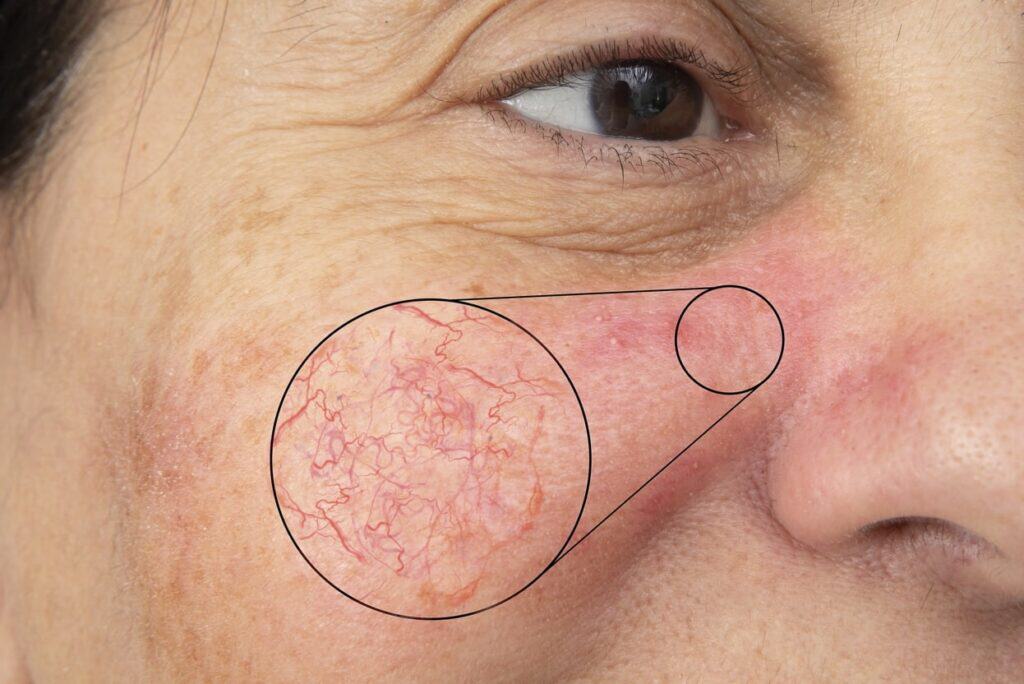
Broken capillaries, also known as facial spider veins or telangiectasias, occur when tiny blood vessels beneath the skin become enlarged and visible.
They often appear as:
Although they’re commonly called “broken” capillaries, these vessels haven’t actually burst. Instead, they’ve become dilated and remain visible through the skin.
One of the leading causes of broken capillaries is cumulative sun exposure. UV radiation weakens collagen and elastin, the structural proteins that help support blood vessels and skin. Over time, this damage can cause blood vessels to become more visible and contribute to chronic facial redness.
This is especially common on:
Daily sunscreen use remains one of the best ways to protect your skin from developing visible blood vessels and signs of premature aging.
Sometimes, the cause is simply in your DNA. If your parents or close relatives have visible facial veins, rosacea, or persistent facial redness, you may be more likely to develop broken capillaries yourself. Patients with fair skin often notice these vessels more prominently because there is less pigment to conceal them beneath the skin.
Many people mistake rosacea for sensitive skin or occasional flushing.
Rosacea is a chronic inflammatory skin condition that frequently causes:
Over time, repeated inflammation and flushing can cause capillaries to enlarge and become permanently visible. In fact, rosacea is one of the most common underlying causes of broken capillaries on the face.
Anything that repeatedly causes the face to flush can contribute to visible blood vessels over time.
Common triggers include:
Repeated dilation of facial blood vessels may eventually cause them to remain enlarged and visible even when the flushing subsides.
As we age, our skin naturally produces less collagen and elastin. The skin becomes thinner, and the supportive structures surrounding blood vessels weaken. As a result, capillaries become more visible through the skin’s surface. This is one reason broken capillaries often become more noticeable in our 40s, 50s, and beyond.
Wind, cold temperatures, heat, and sudden weather changes can all place stress on the skin and blood vessels. People who spend significant time outdoors may experience more facial redness and visible capillaries due to repeated environmental exposure. This is particularly common in regions that experience seasonal weather extremes.
Repeated irritation can also contribute to broken capillaries.
Potential triggers include:
While skincare products don’t directly “cause” broken capillaries, chronic irritation can increase inflammation and redness, making existing vessels more noticeable.
Unfortunately, once a capillary becomes permanently dilated and visible, it typically does not disappear on its own. While skincare products may help reduce redness and inflammation, they generally cannot eliminate visible blood vessels that have already formed. This is why many patients seek professional treatment.
The most effective treatments target the blood vessels directly.
Depending on your skin type and concerns, treatment options may include:
At NicholsMD, we evaluate the underlying cause of facial redness and visible blood vessels before recommending treatment. Because broken capillaries can sometimes be associated with rosacea or other skin conditions, a personalized approach is key.
While not all broken capillaries can be prevented, these habits may help reduce your risk:
If you’re experiencing:
A board-certified dermatologist can help determine the cause and recommend the most effective treatment options.
Broken capillaries are incredibly common, but they don’t have to be something you simply live with.
Whether they’re caused by sun damage, genetics, rosacea, aging, or repeated flushing, understanding the underlying trigger is the first step toward healthier-looking skin.
At NicholsMD, our board-certified dermatology team takes a personalized approach to facial redness and vascular concerns, helping patients achieve clearer, more even-toned skin with treatment plans tailored to their unique needs.
If you’re concerned about broken capillaries, facial redness, or rosacea, schedule a consultation to learn which treatment options may be right for you.
One of the most common questions we hear at NicholsMD is:
“When should I start Botox?”
The answer may surprise you. There is no magic age when everyone should begin treatment. Instead, the right time depends on your facial anatomy, muscle movement, genetics, skin quality, and aesthetic goals. Whether you’re considering preventative Botox in your 20s or corrective Botox later in life, understanding how neuromodulators work can help you make an informed decision.
Botox is a neuromodulator that temporarily relaxes specific facial muscles responsible for creating expression lines.
Common treatment areas include:
When administered by an experienced injector, Botox can soften wrinkles while maintaining natural facial movement and expression. At NicholsMD, our philosophy is simple: #NaturalAtNichols results that help you look refreshed, never frozen.
Preventative Botox refers to treatment before wrinkles become permanently etched into the skin.
Every time you smile, squint, frown, or raise your eyebrows, your facial muscles create folds in the skin. Over time, those temporary lines can become visible even when your face is at rest.
Preventative Botox works by reducing repetitive muscle movement before deeper lines develop.
The goal is not to change your appearance. The goal is to preserve smoother skin over time.
The better question is not “How old are you?” but rather “What is your skin showing?”
Some patients begin preventative Botox in their late 20s or early 30s, while others may not need treatment until later.
You may be a good candidate if:
Rather than focusing on age alone, we evaluate the unique characteristics of your face and skin.
Absolutely not. Many patients begin Botox in their 40s, 50s, 60s, and beyond with excellent results.
Corrective Botox can:
While deeper static wrinkles may not disappear completely with Botox alone, treatment can significantly improve their appearance.
Goal:
Prevent lines from becoming deeply etched.
Best For:
Patients noticing early movement-related wrinkles.
Goal:
Improve the appearance of existing wrinkles and prevent progression.
Best For:
Patients with established expression lines.
Both approaches can be effective. The right strategy depends on your skin, goals, and anatomy.
At NicholsMD, every Botox treatment begins with a comprehensive consultation.
We evaluate:
This personalized approach allows us to determine whether Botox is appropriate and how much product is needed to achieve natural-looking results.
Many people associate Botox solely with anti-aging, but neuromodulators can also be used for:
When performed thoughtfully, Botox can subtly enhance overall facial harmony.
Most patients enjoy results for approximately three to four months. Consistent treatment can help maintain smoother skin and may reduce the formation of deeper wrinkles over time. Many NicholsMD patients choose to maintain their results through regular appointments and customized treatment plans.
The best time to start Botox is not determined by a birthday. It’s when your skin, muscle movement, and goals indicate that treatment could be beneficial. Whether you’re curious about preventative Botox, looking to soften existing wrinkles, or simply exploring your options, a consultation with a board-certified dermatology team can help you understand what is right for you. At NicholsMD, we believe great results should never look obvious. Through personalized treatment planning and a commitment to natural-looking outcomes, we help patients age confidently and beautifully on their own terms.
Interested in learning whether Botox is right for you? Schedule a consultation with NicholsMD and discover what a customized approach to aging well can look like.
If you’re noticing persistent acne in your 20s, 30s, 40s, or beyond, you’re far from alone. Adult acne is one of the most common concerns we treat at NicholsMD. In fact, many adults are surprised to learn that acne can continue well into adulthood or even appear for the first time later in life. The good news? Understanding what’s causing your breakouts is the first step toward clearer, healthier skin.
Adult acne is often more complex than teenage acne. While excess oil production and clogged pores still play a role, adult breakouts are frequently influenced by hormones, stress, lifestyle factors, and even the products you’re using.
Common causes of adult acne include:
Because acne has multiple contributing factors, a personalized treatment plan is often the most effective approach.
Hormonal acne is especially common in women and often appears along the lower face, jawline, chin, and neck.
You may be experiencing hormonal acne if your breakouts:
Hormones such as androgens can increase oil production, leading to clogged pores and inflammation. This is why hormonal acne often requires a different treatment strategy than traditional acne. At NicholsMD, we frequently evaluate whether hormonal influences may be contributing to breakouts before recommending treatment.
Many patients are surprised to learn that their skincare routine may actually be contributing to their breakouts.
Over-Exfoliating – More is not always better. Using multiple acids, scrubs, retinoids, and acne products at once can damage your skin barrier, causing irritation and inflammation that may worsen acne.
Chasing Every Trend – TikTok trends and viral skincare products can be tempting, but not every product is right for every skin type. What works for one person may trigger breakouts for another.
Using Comedogenic Products – Some moisturizers, makeup products, and hair products contain ingredients that can clog pores and contribute to acne. A board-certified dermatologist can help identify whether your products are helping or hurting your skin.
Skipping Moisturizer – Many acne sufferers believe moisturizing will make breakouts worse. In reality, dehydrated skin can become irritated and produce even more oil, potentially leading to additional breakouts.
Is It Really Acne? – Not every breakout is actually acne. Conditions such as rosacea, perioral dermatitis, folliculitis, and irritation from skincare products can closely resemble acne. This is one reason why a professional evaluation is so important. Treating the wrong condition can delay improvement and worsen symptoms.
While over-the-counter products can help some individuals, persistent or severe acne often benefits from professional treatment.
Depending on your skin, your treatment plan may include:
At NicholsMD, we utilize advanced skin analysis and personalized treatment plans to identify the root cause of your breakouts and create a strategy tailored specifically to your skin.
If your acne is:
It may be time to schedule a consultation. The earlier acne is treated effectively, the lower the risk of long-term scarring and pigmentation changes.
Adult acne can be frustrating, but it is also highly treatable. Whether your breakouts are hormonal, stress-related, or caused by an underlying skincare mistake, identifying the true cause is key to achieving clearer skin.
At NicholsMD, our board-certified dermatology team takes a personalized approach to acne treatment, helping patients throughout Greenwich, Fairfield County, and beyond achieve healthier, more confident skin. If you’re still asking, “Why am I breaking out?” we’re here to help you find answers.