























Have you noticed tiny red, pink, or purple lines appearing on your cheeks, around your nose, or across your face?
Often referred to as “broken capillaries,” these visible blood vessels are one of the most common concerns we see in dermatology. While they may seem to appear overnight, broken capillaries typically develop gradually over time due to a combination of genetics, lifestyle factors, environmental exposure, and underlying skin conditions.
The good news? They’re common, they’re usually harmless, and there are highly effective treatment options available. Here’s what you should know about what causes broken capillaries on the face and how to help prevent them.
What Are Broken Capillaries?
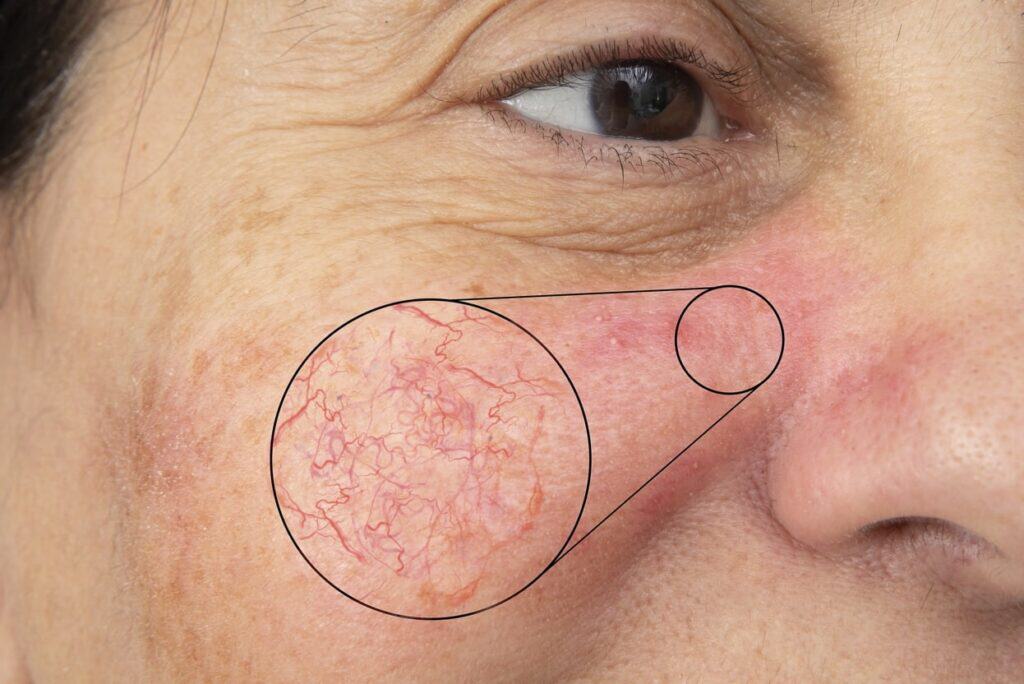
Broken capillaries, also known as facial spider veins or telangiectasias, occur when tiny blood vessels beneath the skin become enlarged and visible.
They often appear as:
- Thin red or purple lines
- Small web-like patterns
- Persistent redness around the nose
- Visible blood vessels on the cheeks
- Redness that doesn’t fade
Although they’re commonly called “broken” capillaries, these vessels haven’t actually burst. Instead, they’ve become dilated and remain visible through the skin.
1. Sun Damage
One of the leading causes of broken capillaries is cumulative sun exposure. UV radiation weakens collagen and elastin, the structural proteins that help support blood vessels and skin. Over time, this damage can cause blood vessels to become more visible and contribute to chronic facial redness.
This is especially common on:
- The nose
- Cheeks
- Chin
- Décolletage
Daily sunscreen use remains one of the best ways to protect your skin from developing visible blood vessels and signs of premature aging.
2. Genetics
Sometimes, the cause is simply in your DNA. If your parents or close relatives have visible facial veins, rosacea, or persistent facial redness, you may be more likely to develop broken capillaries yourself. Patients with fair skin often notice these vessels more prominently because there is less pigment to conceal them beneath the skin.
3. Rosacea
Many people mistake rosacea for sensitive skin or occasional flushing.
Rosacea is a chronic inflammatory skin condition that frequently causes:
- Persistent redness
- Facial flushing
- Visible blood vessels
- Skin sensitivity
- Acne-like bumps
Over time, repeated inflammation and flushing can cause capillaries to enlarge and become permanently visible. In fact, rosacea is one of the most common underlying causes of broken capillaries on the face.
4. Frequent Facial Flushing
Anything that repeatedly causes the face to flush can contribute to visible blood vessels over time.
Common triggers include:
- Hot weather
- Spicy foods
- Alcohol
- Hot beverages
- Intense exercise
- Emotional stress
Repeated dilation of facial blood vessels may eventually cause them to remain enlarged and visible even when the flushing subsides.
5. Aging and Collagen Loss
As we age, our skin naturally produces less collagen and elastin. The skin becomes thinner, and the supportive structures surrounding blood vessels weaken. As a result, capillaries become more visible through the skin’s surface. This is one reason broken capillaries often become more noticeable in our 40s, 50s, and beyond.
6. Environmental Exposure and Weather
Wind, cold temperatures, heat, and sudden weather changes can all place stress on the skin and blood vessels. People who spend significant time outdoors may experience more facial redness and visible capillaries due to repeated environmental exposure. This is particularly common in regions that experience seasonal weather extremes.
7. Skin Trauma and Irritation
Repeated irritation can also contribute to broken capillaries.
Potential triggers include:
- Aggressive scrubbing
- Over-exfoliation
- Picking at the skin
- Harsh skincare products
- Frequent rubbing of the face
While skincare products don’t directly “cause” broken capillaries, chronic irritation can increase inflammation and redness, making existing vessels more noticeable.
Can Broken Capillaries Go Away on Their Own?
Unfortunately, once a capillary becomes permanently dilated and visible, it typically does not disappear on its own. While skincare products may help reduce redness and inflammation, they generally cannot eliminate visible blood vessels that have already formed. This is why many patients seek professional treatment.
What Is the Best Treatment for Broken Capillaries?
The most effective treatments target the blood vessels directly.
Depending on your skin type and concerns, treatment options may include:
- Laser therapy
- Vascular laser treatments
- Light-based treatments
- Rosacea management
- Customized skincare regimens
At NicholsMD, we evaluate the underlying cause of facial redness and visible blood vessels before recommending treatment. Because broken capillaries can sometimes be associated with rosacea or other skin conditions, a personalized approach is key.
How Can You Help Prevent Broken Capillaries?
While not all broken capillaries can be prevented, these habits may help reduce your risk:
- Wear broad-spectrum SPF daily
- Avoid excessive sun exposure
- Use gentle skincare products
- Protect your skin from extreme temperatures
- Avoid over-exfoliation
- Seek treatment for rosacea early
- Maintain regular dermatology visits
When Should You See a Dermatologist?
If you’re experiencing:
- Persistent facial redness
- Visible blood vessels around the nose or cheeks
- Frequent flushing
- Sensitivity or irritation
- Symptoms of rosacea
A board-certified dermatologist can help determine the cause and recommend the most effective treatment options.
The Bottom Line
Broken capillaries are incredibly common, but they don’t have to be something you simply live with.
Whether they’re caused by sun damage, genetics, rosacea, aging, or repeated flushing, understanding the underlying trigger is the first step toward healthier-looking skin.
At NicholsMD, our board-certified dermatology team takes a personalized approach to facial redness and vascular concerns, helping patients achieve clearer, more even-toned skin with treatment plans tailored to their unique needs.
If you’re concerned about broken capillaries, facial redness, or rosacea, schedule a consultation to learn which treatment options may be right for you.